
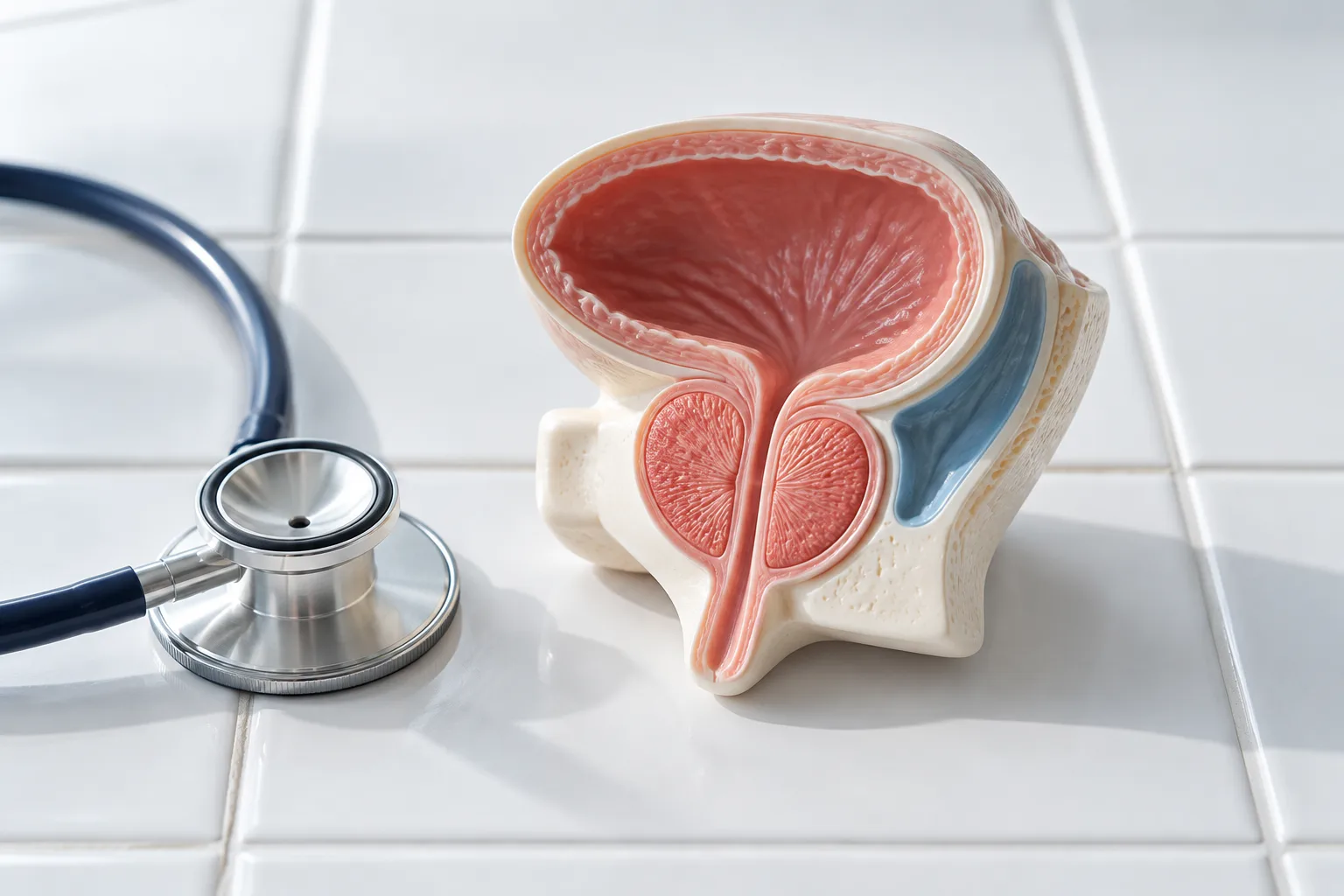
International patients should know that prostatitis treatment depends on which type of prostatitis is behind your symptoms, so the first step is a proper assessment rather than a standard course. Happy Morning Clinic in Yeongtong-gu, Suwon, lists prostatitis treatment among its urology services, together with enlarged prostate care, overactive bladder, cystitis and other men's health concerns. This article focuses on what a visitor from abroad should understand about the condition and the planning that surrounds it. For the clinic's wider range of men's care, see Urological conditions in men.
What kinds of prostatitis are there?
Prostatitis is a common clinical syndrome rather than a single disease. Doctors usually describe four categories: acute bacterial, chronic bacterial, chronic prostatitis with chronic pelvic pain syndrome, and a form without symptoms. The pelvic pain form is described as the most common, and it does not always come with a detectable infection.
This matters for travellers because a diagnosis made elsewhere may be worded differently from what a urologist in Korea concludes after examining you. The bacterial forms are generally treated with antibiotics, while the approach for the pain-centred form is decided individually. The clinic's materials list prostatitis treatment as a service, and your doctor will explain how your symptoms fit after consultation.
How is prostatitis assessed?
Assessment generally begins with your history, a physical examination and tests that look for infection. Bacterial prostatitis is mainly identified through the story of your symptoms and laboratory studies, and examination can help show where in the urinary and genital system the problem sits.
The clinic's own wedding checkup materials describe a prostate check that uses an ultrasound scan, a blood test and a test of prostatic fluid to look at prostate health, and they note that this check is relevant to younger men too. Which tests are used for a prostatitis consultation is decided by your doctor after hearing your symptoms, so it is reasonable to ask at first contact what is likely.
Specialists point out that diagnosis can be difficult, partly because there is limited high-quality evidence guiding how symptoms, examination and laboratory findings should be interpreted. If you have received different explanations before, bringing earlier records will help.
Why can prostatitis care extend beyond a single visit?
Prostatitis can take time to manage because treatment of the bacterial forms is challenging. Only some antimicrobials reach the prostate well, resistance can limit the options, and recurrence is a recognised concern. How these points apply to you is explained at consultation.
For someone living abroad, this is the most practical issue, since a condition that may need review over time fits awkwardly with one short trip. Useful questions are what can be assessed during a single visit, what a follow-up would involve, and whether your findings and any medicines can be written down by ingredient name so that a doctor at home can continue care. The clinic's materials do not state that remote follow-up is offered, so please confirm that directly instead of assuming it.
Can prostatitis affect fertility or family planning?
Prostatitis can be relevant to reproductive health, because the prostate produces fluid that forms a major part of semen and influences sperm function. Reviews describe prostatitis as the most common prostate disorder, particularly with advancing age, and note that it may affect reproductive health in some men.
If you and a partner are planning a pregnancy, mention it at the first consultation. The clinic's wedding checkup materials describe testing for sexually transmitted infections and a check of sperm count, shape and movement, which are topics couples often raise. Whether any of these suit you is decided in consultation.
What practical details should a visitor prepare?
Before contacting the clinic, write down your symptoms, how long you have had them, and any earlier test results or medicines. Having these ready in English helps the doctor place your situation more quickly.
- A short symptom timeline, including pain, urinary changes or fever if you have had them.
- Previous urine, blood or ultrasound reports.
- Questions about expected tests, whether follow-up is needed, and how costs are explained.
The clinic's listed doctor background includes graduation from Yonsei University College of Medicine, internship and residency at Severance Hospital, and membership of the Korean Urological Association, the Korean Society for Andrology and the Korean Prostate Society; more is on the Our Doctor page. The clinic is on the sixth floor of the Seongmo Building on Deokyeong-daero in Yeongtong-gu, Suwon. Listed hours are morning to evening on Monday, Tuesday, Wednesday and Friday, an afternoon start on Thursday with the last Thursday of each month closed, and a shorter Saturday, with a lunch break; please confirm current hours before travelling. Costs are explained at consultation, and suitability and results differ by person. You can reach the clinic through Contact Us.