
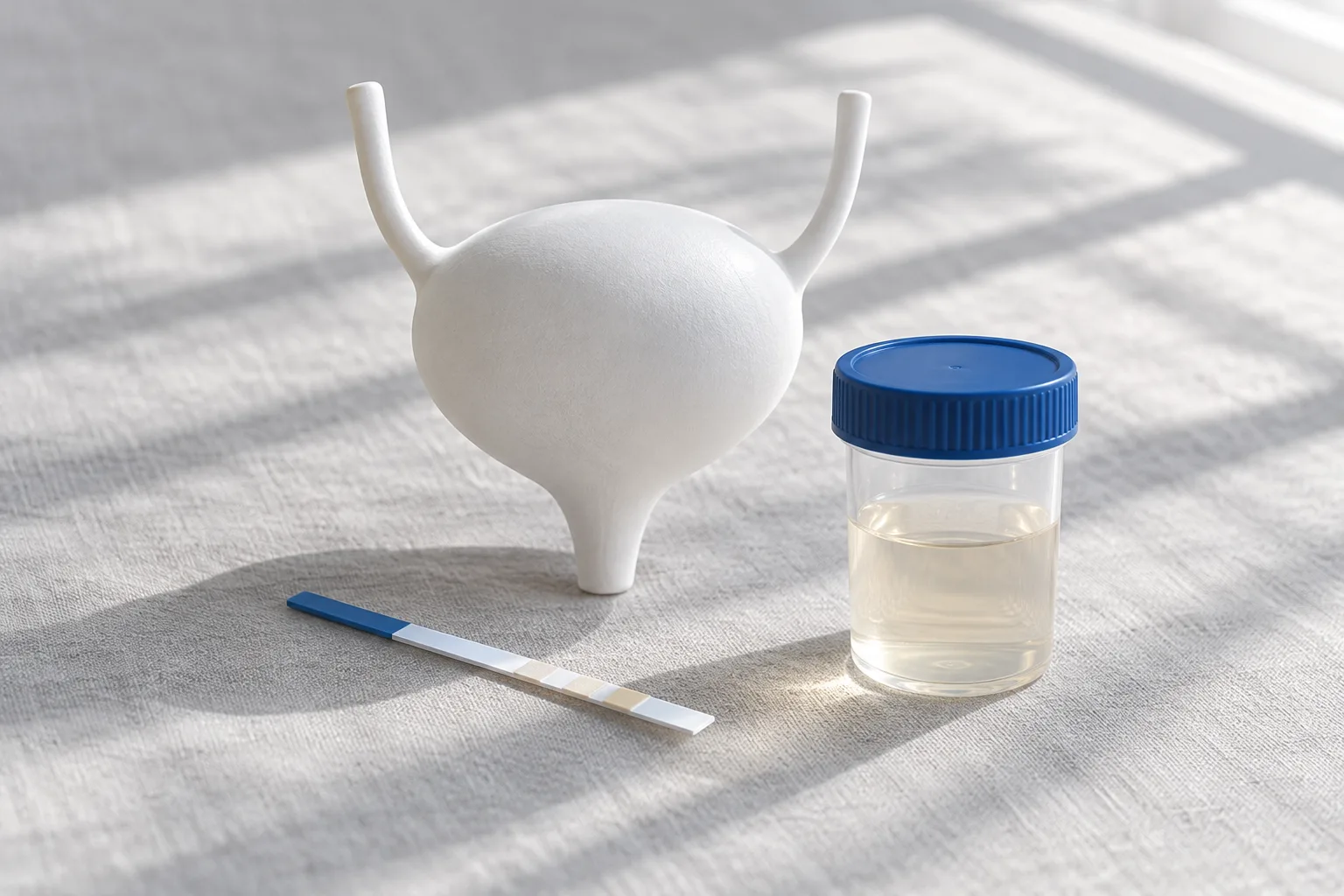
International patients who are thinking about cystitis treatment should know that care usually begins with a clear description of your symptoms and, where the doctor considers it useful, a urine test, and that this kind of assessment is available at Happy Morning Clinic in Yeongtong-gu, Suwon, where cystitis treatment is listed among the urology services. Cystitis is a bladder infection or inflammation, and the right plan depends on the cause and on the person. This article looks at it from a traveller's point of view: how to explain what you feel, what a short stay can and cannot settle, and what to bring. It does not replace an examination.
What is cystitis, and how do doctors recognise it?
Cystitis is a bladder infection, and it belongs to the wider group of urinary tract infections, which are among the most common bacterial infections seen in everyday medical practice. Pain or burning when passing urine and needing to go more often are the typical signs. When these occur without vaginal discharge or irritation, they point strongly toward cystitis.
Because other conditions can cause similar urgency or frequency, the doctor will usually ask about your history before settling on a diagnosis. The clinic also lists overactive bladder and incontinence care, so a careful assessment helps separate an infection from other bladder problems. For the wider scope of the department, see the pages on urological conditions in women and urological conditions in men.
How should I describe my symptoms in a foreign clinic?
Clear, simple notes help the doctor more than medical vocabulary. Write down what you feel, when it began, and whether it has happened before, then show the notes on your phone or on paper. This is general advice that holds for any clinic abroad.
- Pain or burning when passing urine, and how often you need to go.
- Any blood in the urine, fever, or pain in the side or back, which the doctor will want to hear about early.
- Whether symptoms have returned after earlier treatment.
- Other health conditions, current medicines and known drug allergies, using the generic ingredient names rather than only local brand names.
The materials available to us do not mention interpreter services, so it is sensible to ask about language support when you get in touch.
What does treatment usually involve?
Treatment for a bacterial bladder infection generally relies on antibiotics chosen to act against the bacteria that most often cause these infections, such as Escherichia coli. How long a course lasts varies, and the doctor decides this based on your situation. Please do not start, stop or substitute antibiotics on your own, including leftover medicine from another country.
Urine culture is generally recommended when the infection is more serious, keeps returning, or is considered complicated. A culture helps identify the bacteria and guides which medicine is suitable. Whether a test is advisable in your case is something the doctor explains at consultation. Suitability, response and recovery differ from person to person.
What if my symptoms keep returning or seem more serious?
Recurrent infections and infections that involve the kidneys are handled differently from a single uncomplicated episode, and general guidance is that they call for urine culture and closer management. If you have had several episodes, say so at the start of the visit.
This matters for travellers in particular, because a test result or a follow-up review may need to be planned around your departure date. Ask the doctor what can be done during your stay and what should be continued with a doctor in your home country. Bringing earlier urine test results, ideally with a translated summary, makes that conversation easier. The clinic director's training and society memberships are described on the Our Doctor page.
What practical details should I know before visiting?
Bladder symptoms are uncomfortable, so it is better to arrange an assessment promptly than to wait until the end of a trip. Happy Morning Clinic is at Seongmo Building, 6th floor, 1525 Deogyeong-daero, Yeongtong-gu, Suwon, Gyeonggi Province. It is open Monday, Tuesday, Wednesday and Friday from 09:30 to 18:30, on Thursday from 14:00 to 18:30, and on Saturday from 09:30 to 14:00, with a lunch break from 13:00 to 14:00. It is closed on the last Thursday of each month, so check the day before you travel.
The materials available to us do not mention insurance handling or payment arrangements, so please ask about costs when you get in touch through the Contact Us page.